Award-Winning Poem Featured in ‘Boomerlitmag’

My poem Dream and Dream and Dream, which was long-listed for the 2023 Fish Publishing Poetry Prize, has been published in the highly-rated Boomerlitmag. The journal is #58 on a highly-regarded list of the top literary magazines. The ratings are based on the number of their contributors from the previous year who are selected as winners of the coveted Pushcart Prize. As an example, Paris Review is ranked #1.

Here is the link: https://boomerlitmag.com/allen-shadow-2/ and the poem is posted below.

Dream and Dream and Dream

Mama, as everything was going on
I was watching, always watching you

crossing the Bronx streets when I was five
taking my big sister to school

you were crossing me
but, really, I was crossing you

when my father would let go your hand
in the middle of a vast boulevard

when cars rumbled when trucks roared


Always, mama, always
wanting to make it better for you
even though there was no way

when Superman flew
the blind girl around the world
and she could see again

I wanted him to come break
through the front windows
and take you

bring you back seeing
setting you down in the little square
living room or on the back porch

so you too could see all the
birds and the great Oak
and then could dance

around the corner
along Southern Boulevard
all the way to Tremont


All the places, just think, mama—
the story clouds, the platypus at the zoo,

elephants, the island in the Pacific
where, surely, you’d be a princess


Just think, we could cheat the
night custodian to off-load all the fear

and float on the aimless wind—
the sky is loud, mama, loud


Well, I could always go to sleep, anyway
and dream and dream and dream

sometimes there’s a song you can’t know
but you can sing, nonetheless

Finalist for the Robert Day Award for Fiction

I’ve been named a finalist for the Robert Day Award for Fiction, from the noted literary magazine New Letters. The editors are currently considering which finalist short stories it will publish in the magazine.

The short story I submitted, A Day in the City, is one of the first I began writing when, in the 1990s, I felt I finally had my fiction legs under me. I always thought it was a strong, worthy story, and as an example of how kooky discovery is in this field, the story has been rejected by magazines 52 times over the years (despite receiving very strong comments from a number of top editors). Even now, while I feel this award has validated my feelings, the story still may not be selected for publication. And, until it is, I can’t show it here or anywhere else, since it must be virginal to be considered by magazines. Tough stuff, eh? And I’ve had many similar experiences with poems, manuscripts, songs, and screenplays. Fortunately, however, in the case of poems, many that have been rejected numerous times, have finally been selected for publication. Ahh!!!

As I’ve been watching the baseball playoff games this October, I’m reminded of the fortitude required of professional baseball players. The other night it was noted how one outfielder in the game, now 28, had played in more than 700 minor league games before being called up to the majors last month.

BTW, New Letters is ranked #37 on a highly-regarded list of the top lit magazines. The ratings are based on the number of their contributors from the previous year who are selected as winners of the coveted Pushcart Prize. As an example, Paris Review is ranked #1.

I Read Your Letters, America

For Indigenous Peoples’ Day, I offer this poem of mine

I Read Your Letters, America*

So now I know about your lies
lies you told Sitting Bull
and Chief Joseph
over and over again
before the God mountains
and sacred grass

So now I know about your bullets
and your torture
how you tore the hearts from the Lakota, the Apache and the Nez Pers
how you tried to stretch their souls onto a cross

Shame on you, America
I didn’t know my father was a thief
it will be hard now to ride in the Buick
with the top down
the radio dancing over the corpses under the highway

*Will appear in the fall edition of Waymark magazine

‘The Beautiful Winding’ Selected in Major Poetry Book Competition

Today I learned my poetry manuscript The Beautiful Winding was recognized as an honorable mention in the 2023 Stevens Poetry Book Competition, judged by the distinguished poet Edward Hirsch, a National Book Critics Circle Award winner and MacArthur “Genius Grant” recipient. In addition, he is president of the John Simon Guggenheim Memorial Foundation and is a Chancellor of the Academy of American Poets.

Last year’s winner, Nancy Hengeveld

There were three winner categories and three honorable mentions, from 249 submissions world-wide. At first blush an honorable mention might not seem like something to crow about. But it’s huge to have a manuscript recognized in this class. It’s telling you you’re not crazy, your stuff is that good, and gives you extra oomph to keep pushing for The Beautiful Winding to become a winner and to be released by a top publisher. The competition these days is stiffer than ever.

I write every day. It’s something I’ve done most of my adult life, as poet, novelist, and songwriter. That said, since I retired from my job six years ago, I’ve been able to put my shoulder into submitting my stuff—to agents, publishers, magazines, etc. I’ve had individual poems published by some of the best literary magazines. So now I can hope to become a winner in the book category, as I keep pushing.

‘Poet in the City’: the Lost Gem

The following is from Mat Danks’ Excavation Tape Project, which attempts to unearth previously undiscovered musical gems:

Excavation Tapes #267: ‘Poet in the City’ by Allen Shadow

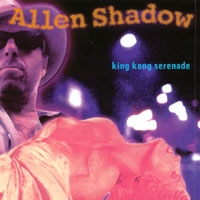
kks-album-cover Wow, this is dark. And very cool. Listen here.

It’s a creeping, haunting yomp over some brilliantly bleak, industrial clangy instrumentation. Perhaps, like a gothic take on John Cooper Clarke with some pretty obvious touchpoints of Nick Cave and Tom Waits.

It’s from a 2002 album called ‘King Kong Serende’ and a bit of digging into Allen Shadow (see his blog here) suggests he’s a bit of a renaissance man. His Twitter bio states: “Novelist Allen Shadow (aka Allen Kovler) is also a music artist, poet, journalist & PR pro (APR) who blogs on writing, music and politics.” Which is what we like here on the Excavation Tapes.

If this project is all about unearthing really interesting and brilliant material lost in the banal mainstream crossfire, then we’ve got ourselves a gem here.

–Mat Danks

‘Wrecked Nash’

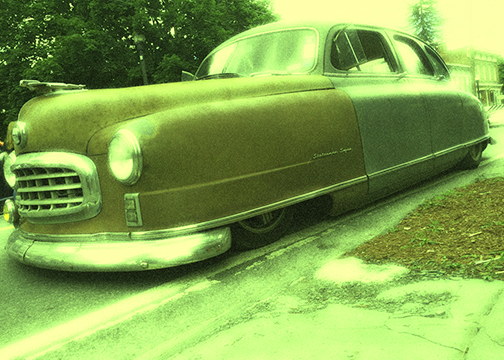
Upon viewing this beast, this tank, this dream of a car at a local auto show, I knew it was time to reprise this poem from my recent chapbook, “America, I’ll Have My Way With You,” followed by a rumination on the original experience, which appeared in a post here on 3/9/10.

Nash_Full Car

In the Wrecked Nash

Big stand of day lilies
in the July morning
the time when the trees
begin to hang
 
the country taxi
takes a bend on 23A
headed up the mountain
 
I was nine the summer
in Mahopac when the ambulance
came and took old man Figarelli
the guy who threw
hot water on the dogs
humping on the gravel roads
of the bungalow colony
 
later me and Leif
sat among the hornets
in the wrecked Nash
that listed in the weeds
 
we had the front seat
and the world
all to ourselves
the huge plastic wheel
the split windshield
the hot seats
 
we could make up anything
excursions to distant states
being Audie Murphy
home runs a mile high
deadmen flying through the trees

From ‘The Hot Ride’ (3/9/10)

A heat bomb hit me when I slid into my Chevy today, a welcome rapture after an icy winter in upstate New York. It took me right back to the tireless Nash that was heaped among the weeds in my boyhood, nested among toads and copperheads in a bungalow colony in Peekskill.

A James Deanish boy named Leif was my summer partner in crime. He was the true grit country boy, I, the city kid learning the ropes. We were just short of teenage, and that mechanical skeleton was our rocket to the moon.

We sat in the stultifying July sun, hornets circling; our souls exulted from the dusty upholstery scents as we took turns behind the hot steering wheel, the battered speedometer feeding our imaginations. The cracked and crazed sheet metal became a time machine, taking us on far journeys through states that were as yet unknown. Our young hearts baked and burned. Turn after turn, we explored, as if mapping out the rest of our lives.

I have no idea what happened to Leif after that summer. Year after year, my own soul baked on: in my father’s Studebaker, Dodge; in my first car, a 1948 Cadillac hearse. That black monolith took me to California and back twice, tracing every road I had imagined in that magical Nash.

It persists. I’ve since traveled the back roads of most states. I continue the journey every chance I get: Cross Creek, Savannah, New Orleans, Pueblo, Greensboro, Kansas City, Staunton, Barstow, Albuquerque. Somehow, it’s always just beginning, when the sun enwraps you behind the wheel.

America is in my blood, my bones, as evinced in my writing.

The Story Behind the Novel ‘Hell City’

Rome wasn’t built in a day, and neither was my debut thriller, “Hell City.” The Rap Sheet just published the story behind the novel. It’s all about how a boy with a car made of kitchen chairs drove around the world in his mind, then took his imagination on the road of life, steering it through stints as a poet, a newspaper reporter, a musician and, finally, a novelist.

“…half cows, men with blood-smeared aprons…”

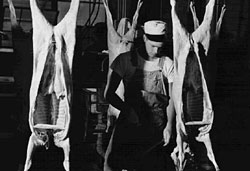
Let’s go back to the era when this author was 5 years old, standing on a rooftop in West Harlem, marveling at the hard dark and light of the Meatpacking District while on a trip to my father’s bookkeeping office–trucks with half cows, men with blood-smeared aprons, crows wheeling under the vaulted girders of the West Side Highway viaduct. Then came the poems, during my college days and beyond. Poems that refracted the chiaroscuro of the city’s façades, the dolor of her teeming but lonely streets. Poems that found their way into many a small-press magazine, into chapbooks. Poems that caused Library Journal to cite my work for its “startling imagery.”

Along the way, I worked in the city’s warehouses, drove her cabs, wrote for her newspapers, and sang in her nightclubs. Her underbelly was my beat, forging a gritty, cinematic prose style.

Note: as part of a special promotion, my novel, “Hell City” can be downloaded free from the Kindle Store on Nov. 14 and 15 only.

My Novel Will Be Free for a Day — Oct. 17

Hell City” is part of a special Amazon Kindle program that allows me to offer some free days, when you can go to the thriller’s Kindle page and download it free of charge. You heard right. Should I say: “an offer you can’t refuse.”

The date is Oct. 17. Just visit the page anytime that day and click. And if you don’t have a Kindle, no problemo. Amazon offers a free reader app you can download for your PC or Mac. You can also read it on an iPad, an iPhone or a Droid.

In “Hell City,” you’ll encounter unforgettable characters, an unlikely love affair and a race against devastation. “I was mesmerized,” writes one Amazon reviewer, who goes on:

I couldn’t put this down. I totally got into the characters, Jack and Annette. If this is his first novel, definitely can’t wait for his second.

Has Al-Qaida Been Reinvigorated?

In the lead story in today’s New York Times, senior terrorism correspondent Eric Schmitt — who recently wished me luck with my 9/11-launched novel “Hell City” — writes:

The attack on the United States mission in Benghazi, Libya, that killed Ambassador J. Christopher Stevens has set off a new debate here and across the Middle East about whether Al Qaeda has been reinvigorated amid the chaos of the Arab Spring or instead merely lives on as a kind of useful boogeyman, scapegoat or foil.

There’s a great debate going on in Washington and the Middle East over whether al-Qaida (I use the AP-style spelling) is operational or whether newer insurgent groups are simply deploying its terrifying brand. That’s kind of where the term al-Qaida 2.0 comes from.

One thing is certain: there is no shortage of entrenched, sophisticated insurgent groups, the Haqqani clan in the Af-Pak region being one of the most dangerous. They have been responsible for most of the attacks on embassies in the region and many attacks on our troupes. It’s possible they are behind the recent deadly bombing in Kabul, another protestation over the Youtube-posted film under the name of “Innocence of Muslims,” although so far a branch of the insurgent group Hezb-i-Islami has claimed responsibility.

Consider this: it was the Kabul bombing, taken together with the other attacks across some 40 cities in the Middle East and North Africa, that led the U.S-led coalition to curtail operations with Afghan security forces, the very core of what remains of our mission in Afghanistan. Talk about decimation. Man, what do we have left?

Image

So, the idea that organized, sophisticated insurgency, jihad, has somehow been defanged in the Middle East and beyond is simply nuts. The entire region is on fire and is coming apart at the seams.

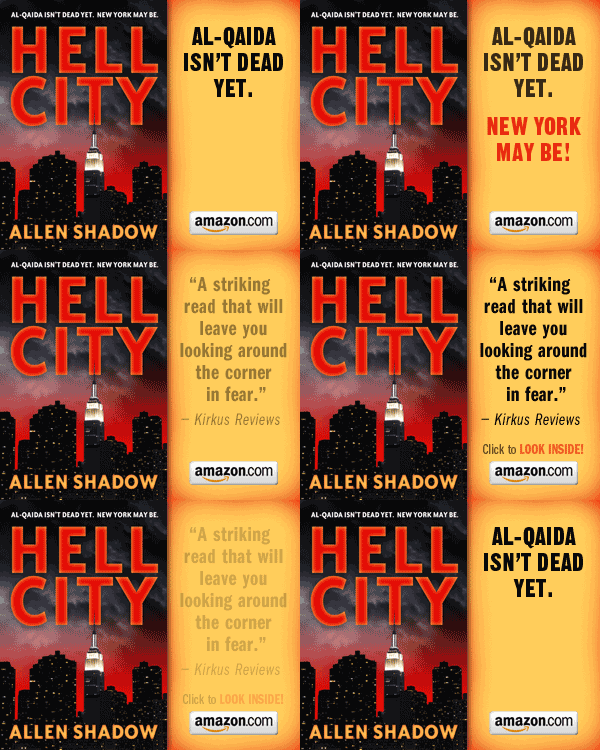
Which brings me to the plot of “Hell City.” As the protagonist, counterterrorism commander Jack Oldham, believes: “Al-Qaida isn’t dead — yet!” What Jack believes is that we can’t go to sleep on the “new gen” al-Qaida as he and his comrades call it, which is why they track American-born insurgents and their connections to various groups in Af-Pak and Yemen. Among them, by the way, is a fictionalized version of the Haqqani tribe. Can the reconstituted Qaida pull off another “big one” in New York? Well, that’s what reading (click for Kindle page) is all about.

New Terrorist Group at Center of Thriller

A fictionalized version of the Haqqani tribe, a Pakistan-based organization the U.S. State Department just added to its list of terrorist groups, is at the center my thriller, “Hell City.”

The novel casts the group as part of a metastasizing al-Qaida that is bent on pulling off another “big one” in New York.

Fiction aside, the thriller is a wake-up call on the true threat of al-Qaida and its affiliates in the post-bin Laden world.

A Haqqani fighter.
Photograph: Ghaith Abdul-Ahad for the Guardian

Think organized crime. You cripple the New York Mafia and the Russians, the Jheri Curls (Dominican), the Latin Kings and other, fiercer groups, take over the town.

The Haqqanis are entrenched, widespread, connected and virulent. They’ve been behind many of the recent attacks on our troops and diplomats in the Af-Pak region.

Let’s face it. The guy on the subway figures al-Qaida is broken, and he can’t keep up with the parade of threats and new groups. So he turns off, goes to sleep.

To Jack Oldham, the protagonist of “Hell City,” sleep is the enemy. The vigilant commander on New York’s Joint Terrorism Task Force never forgot how the country went into hibernation soon after the first attack on the World Trade Center, in 1993.

The novel’s narrator makes the case:

But the city had come a long way. In her own rugged fashion, she had gone from Trade Center trauma to annoyed indifference, her alligator skin shielded against the seemingly endless terror alerts and aborted plots of the new-gen jihad of the day. The first attack on the towers rocked the city to its core, but it was soon seen as a botched plot by militants who couldn’t shoot straight. They were viewed through the short-range, next-quarter glasses of the West — What? A blind cleric operating out of some storefront mosque in Jersey? Boneheads with names so long they blurred comprehension. What’s this? The Three Stooges? You gotta be kidding me.

Now, with bin-Laden — and other al-Qaida leaders — dead, our country is lulled into thinking that all the insurgents can manage stateside is the one-off, the lone-wolf attack. The airline bomber over Detroit. The Times Square bomber.

But they’re not looking deeper into the landscape of insurgency. Yemen and other African nations have become hotbeds of development for insurgent groups. And then there are the Haqqanis. They’ve been operating with impunity, deep and wide and under the radar — for a generation.