Viral, Schmiral (‘Greatness’ Pt. 2)

Baimurat Allaberiyev – a YouTube sensation – has a major record deal but still has few teeth, literally. And those teeth are planted on the cutting edge of the latest boom-and-bust trend in the music industry: viral-video microfame.

So, let’s get real about the sobering statistics of enduring Web 2.0 success among music artists. To that end, I will explore the verities of the viral-video trend.

But first, this exploration is not meant as a discouragement. It’s simply a reality check. Like a sound check, it gets us in tune, so we can perform at our best. And, as with the old industry, the new music model presents real, if limited, opportunities for enduring success. So, as in the past, the motivation for the serious artist is the very challenge of the overwhelming game itself.

Now, back to Allaberiyev, a former sheepherder from Russia who sang renditions of Bollywood songs all the day long, not unlike early American blues singers who chanted field hollers while picking cotton in the South. Some traditions never die.

Writing in Friday’s New York Times, Ellen Barry, tells how one of Allaberiyev’s signature performances was captured on videophone, eventually making it to YouTube and viral nirvana. But, while this music 2.0 fame led to a record deal with Peter Gabriel’s Real World Records in London, his manager Ilya Bortnyuk offers the sober summation:

“If there will be disappointment, it’s no big deal. It’s show business. There is glamour; there is disappointment. No big deal. I’m used to it after 20 years.”

Barry goes on to cite examples of viral video flameouts like Tay Zonday and Chris Crocker. She quotes Bill Wasik, author of a new book on viral video and Internet celebrity:

“Virtually all of them have found it hard to parlay the experience into a lasting career… Even a short ride is a kind of gift.”

Allaberiyev’s challenge: his charisma must translate into U.S. sales, since world music doesn’t sell in Russia, the environs of his initial following. Because Bollywood show tunes won’t do the trick, his handlers plan on transitioning his repertoire to Afghan and Central Asian folk songs. So, does the man on what feels like the top now find himself with another uphill climb? Certainly. Does he feel like Sisyphus? Yes. Haven’t we all? Yet, that should serve to raise the fighter mojo in him even more. Let’s face it; only heavyweights will win at this game. It’s the same in the new model as it was in the old. Some traditions never die.

And to rally Allaberiyev (also known as Tajik Jimmy), one of his supporters, Yelena Mirzoyeva, has this encouragement:

“A person that feels he is a star; that person will really go somewhere.”

Wasik himself recently penned a New York Times Op-Ed piece making a case for the Internet as the new New York for aspiring artists. He compares making it in Gotham with getting “the big break” on the Internet. The article weighs in with sobering data, which in the end, appear no better than the old music-biz model.

A senior editor at Harper’s and author of “And Then There’s This: How Stories Live and Die in Viral Culture,” Wasik discusses the recently depressed prospects for artists seeking fortune in the Big Apple, and turns his gaze to the Internet, saying:

“Meanwhile, another destination beckons, a place that courses with all the raw ambition and creative energy that the hard times seem to have drained from New York. I am referring, of course, to the Internet, which over the past decade has slowly become the de facto heart of American culture: the public space in which our most influential conversations transpire, in which our new celebrities are discovered and touted, in which fans are won and careers made.”

He cites such Web successes as the The Gregory Brothers, whose humorous YouTube series “Auto-Tune the News” has drawn hundreds of thousands of fans.

But, in the end, Wasik also concludes:

“Microcelebrity is now the rule, with respect not only to the size of one’s fan base but also to the duration of its love. Believe it or not, the Internet is a tougher town than New York; fewer people make it here (New York), but no one there (the Internet) seems to make it for long.”

As I follow the limited cases of significant Internet success, Bon Iver comes to the fore. Yet, keep in mind that his notoriety was spawned from a combination of both viral and print-media attention, including the Wall Street Journal, with one rolling into the other. Some traditions – in this case, PR-wise – never die.

So what statistical sobriety supplies us artists is the tired-but-true principle: the path to success is fraught with frustration and limitation. Same in the new model as it was in the old. So, buckle up, batton down and stay the course. The meek may inherit the earth, but they won’t star in the movie version.
Add to Technorati Favorites
Rock Music Blogs - BlogCatalog Blog Directory

‘On the Road’ to Woodstock 40 Years After

Make no mistake, the Woodstock festival has been viewed with rose-colored glasses, especially from a 40-year vantage point. The event was essentially a massive, disorganized mud pit with a stage-view the size of a dime for most concertgoers. It was as much downer as upper. But, despite its faults, Woodstock was special in ways that defy definition.
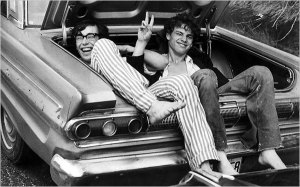
On the road to Woodstock

On the road to Woodstock

It sounds trite to say, “you had to be there.” But you did, and I was. My journey there was part of a summer-long road trip in my 1948 Cadillac hearse. But before I put the sleek three-ton black beauty in gear, let me go back a few years – to the Summer of Love – to put Woodstock in perspective.
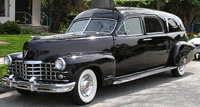
My Cadillac Hearse

It’s June 1967. I meet a college chum on Kingsbridge Road in the Bronx. “Did you hear about the festival? Are you going?,” she says. The festival in question was Monterey (California), and my reply was that I wanted to go bad, but didn’t think I could make it. That killed me. Music meant so much to us college kids back then. There weren’t a million channels of music. You could actually keep up with all of rock: the groups, the movements. You were at the record store when the new Stones album came out, the new Dylan.

That decade there were seismic cultural shifts on the music front year after year. But one needs to understand that the music front of the ’60’s included a major social revolution, one that impacted politics, family dynamics and both personal and interpersonal development.

When The Beatles’ “Sgt. Pepper’s Lonely Hearts Club Band” album came out a month before Monterey, it hit music lovers like a number 9 on the Richter scale. In 1968, The Band debuted with “Music from Big Pink,” blowing listeners minds. No one had envisioned such a sound: a literary gumbo of country, rock and Americana. Then, Bob Dylan, who had already remapped the music landscape in the early part of the decade, released “Nashville Skyline,” in 1969, turning the scene on its head yet again. Seminal events all.

And that’s just a brief snapshot of the ’60’s music-wise. Defined in chief by Elvis, the Beatles, Dylan, the Stones, Jimi Hendrix, and the Grateful Dead, the period was a turning point in the history of music, and culture overall. Let’s face it, the first three in the list make up the Mount Rushmore of 20th century rock.

Monterey, which featured Jimi Hendrix, The Who, Janis Joplin, and the Mamas & the Papas, was the first of the big music festivals; some say the best. It had a huge pull for us kids back then. Besides the music, there was the romance of “California Dreaming.” After all, it was the Summer of Love. Scott McKenzie’s “San Francisco (Be Sure to Wear Flowers in Your Hair”) beckoned from the radio. By July 1967, it was all too much to bear. I may have missed Monterey, but I wasn’t going to miss San Francisco and the Summer of Love. I quit my summer cooking job at Lenox Hill Hospital and set out with friends in a 1947 Cadillac limousine, nearly the same vehicle of Jack Kerouac’s “On the Road.” We put 10,000 mile on the odometer that summer, which included a long stop in Haight-Ashbury.

My friend Richard, the limo’s owner, was a collector of vintage Caddies, and, by 1969, I purchased a 1948 Cadillac hearse from him, my first car. The same year I married my first wife, Carol, and by the summer we had the behemoth packed for another cross-country adventure that included Richard, my sister, Alice and a brilliant folk singer named Ribsy.

Little did we know we were about to ride through history that July and August, with a strange experience in a beat northern California town during the Apollo 11 moon landing, a detention by the L.A. cops the morning after the Tate-LaBianca murders, and a momentous arrival in Woodstock as we rediscovered America. This post is the last of a triptych depicting those three notable dots on the map of the summer of 1969 (links to the previous two above).

When the L.A. cops released us on the morning of Aug. 11, we continued on our way to the festival. We already received our tickets while in California and hit the desert with great expectations. The collective pull of Woodstock was everywhere we went. Just outside of Needles, Calif., we encountered a converted mail truck full of freaks goin’ our way. And the way was Route 66, the curvy dream road that took us first through the West to Texas and north toward Chicago.

It’s probably difficult for today’s youth to understand that being different was not tolerated in many parts of the country in the ’60’s. Hippies, if you will (and I use the term affectionately), in those days got a tiny taste of what it must have been like to be black in America. Of course nothing could begin to compare to the latter experience, but the longhairs plight of the day – so well chronicled in the classic 1969 film “Easy Rider” – was an interesting snapshot of an intolerant America. I’m not accustomed to giving away movie endings, but “Easy Rider” does end with the shotgunning of the lead characters – played by Peter Fonda and Dennis Hopper — on a rural southern road. And that very scene was to have an eerie resonance for us on our next stop.

With Richard staying on in L.A., the remaining four of us stopped in the small western Colorado town of Naturita, as we had left Route 66 for a time. Us two hippie-looking couples were having dinner in a local café in the no-traffick-ight mountain town. A handful of miners were located in a booth across from us. But for the staff, we were the only inhabitants. In short order, the comments came: “why don’t you get a haircut, boy? Them boys really need a haircut, don’t you think, Billy.”

Ribsy and I both had shoulder-length hair, and I had a full beard. The girls wore summer tops, no bras. To the miners we were heathens. It was becoming clear that they wanted to do harm to the men at our table and likely rape the women, who they viewed as loose, because of their dress.

One of the miners picked up a table knife, stroking it gently, provocatively with his right forefinger. “You do need a haircut, hippie. And you need to shave that beard. I’m just gonna have to do that for you, ain’t I boys?”

The staff could have cared less. It was clear we were alone and in the wilderness. We were just about trapped and we were in trouble, big trouble. I told my table we had to leave now, but that we should move naturally, slowly, then enter the hearse without dawdling. “But don’t run, don’t look panicked,” I told them.

The hearse was parked at the curb right outside the restaurant. We got into the car, and by the time I reached the driver’s door, I heard the screen door slam a second time. I made sure not to look back. I climbed behind the wheel and started the car, all in one balletic motion. The instigator of the group stood before the hearse revealing an open switchblade. The scene looked like the cover of a pulp fiction novel.

For some reason, in emergencies I can see and process dozens of things at once, and I keep my head. I had figured that I needed to pull the car out fast, nearly grazing the knife wielder, knocking him off balance without actually hitting him. It would be like Roger Clemens brushing back a batter. My brush-back worked perfectly, and no one was able to jump on the running boards. But there was just one problem. We were nowhere, literally. There was nothing and no one for miles. The nearest real town was Grand Junction, more than a hundred miles away on winding mountain roads, and it would be dark in an hour. I expected to see a pickup truck of shotgun-toting roughriders in my rearview mirror anytime soon. So I drove 90 on straightaways and pressed the curves best I could. It didn’t hurt that I was a professional driver: four years as a New York cabby while going to college. A cabby eventually becomes one with his car, and it came in handy that night.

Somehow, it didn’t happen. Somehow they never caught up with us. Somehow, we escaped a horrible “Easy Rider”-style fate. Late that night in Grand Junction we found a cheap hotel room and crashed, still scared but also high on freedom.

My sister often reminds me of one memorable stretch when we left Colorado. Apparently, I drove 1,200 miles without stopping, all so we could make the Woodstock festival on opening night. I pushed that car like a streamliner train. Since I was the only one who drove shift, I was the sole driver.

When we pulled into White Lake, were were jubilant. First of all, we didn’t hit any of the awful traffic reported on the radio, because we came in from Route 6 in Pennsylvania. Most concertgoers were on the New York State Thruway. And when we came in that back door, the festival pilgrims, seeing the big black beauty, jumped on the hood, the roof, stood on the running boards and bumpers. We entered Woodstock like a sultan coming into Babylon.

That was the high point. From there it was mostly downhill. The fences were down, our tickets were rendered unnecessary. Food was scarce. Vendors were selling single bananas for $3. The hearse was parked in a field almost a mile from the natural amphitheater. By the time we made the long trek to the concert site, the place was jammed and we were forced to take up residence on the top of the hillside. The stage looked like a matchbox. The performers were specs. Then, it started to rain.

The balding aisles turned in to mudslides, with folks slipping, falling. A group of knuckleheads from New Jersey decided it would be fun to piss in the aisle and have a hoot watching people take headers in their private cesspool. It was sickening, disturbing. This wasn’t peace and love.

Look, Woodstock was a city, and everyone on every block, so to speak, had a different experience. Some were tripping their brains out, some were grooving on the music. Richie Havens was great that first day, but it was hard for us to let go of the bummer scene and challenging conditions in our locale.

We did enjoy some of the festival. Besides the music, we had a great experience meeting our Bronx neighbors in the absolute pitch dark on the way back to the car that night. Jack and Barbara had a full supply of bacon and eggs back in their VW van, and we made plans to rendezvous for breakfast. Jack was our cool English professor from Berkeley, and Carol and I rented an attic apartment from he and his wife. Hearing their distinct, friendly voices made our night and helped raise our enjoyment.

I’m not going to review the music, since this piece is more about the big picture of Woodstock. Essentially, the fest was a gathering of a generation that was also a culmination of all we were and everything we had been.

My generation was always about gatherings, sometimes for activism, sometimes for no reason at all. The latter-style assemblages were called be-ins, and they took place in New York, San Francisco and other urban centers and college campuses throughout the mid-’60’s. We were celebrating life and our sense of freedom, openness and experimentation. Sure, some were smug about it, like we had all the answers. Hippies were about being hip. There were us and them, the freaks and the straights. But find any young generation that doesn’t feel the same way.

Dismissiveness regarding Woodstock and, for that matter, the counterculture of the ’60’s irks me. In revised versions of his 1961 book “The Image,” historian Daniel Boorstin, termed the three-day fest the quintessential “pseudo event.”

But one has to look a little deeper, a little further into the context of the festival and its attendees to understand the far-reaching significance of both. Let’s face it, the media debased that generation. At the time, it was easy for an uneasy establishment to term the counterculture hippies. It was easy to view hippies as goofy, bizarre, lazy, drug-hazed, shallow and self-absorbed.

But let’s put hippies in context. Born of the repressive Eisenhower era, so-called hippies spawned several revolutions. The first involved a self-awareness and discovery that changed the entire dynamics of families and interpersonal relationships. The second spawned a rich culture of music that culminated in the statement that was Woodstock. The third, tied to the first two, helped change the course of American politics and turn the tide of the Vietnam War. And, surely, their accomplishments began the culture wars that blaze on to this day.

Of course there was a down side as there is to any disruptive invention. Extraneous parts need shedding, and, certainly, most hippies shed the excesses of their heyday and eventually — after some bumps along the way — founded strong families and careers by their middle years.

I got some great perspective on the Woodstock generation last night from an interview by one of the times’ most respected FM disc jockeys, Pete Fornatale. I mentioned before that there weren’t a million bands and niches as there are today, and that there weren’t many channels. WNEW-FM in New York was headquarters for the music, and to some extent, the culture of those times. Fornatale had just joined the station a month before Woodstock. Last night, WFAN’s Mike Francesa interviewed Fornatale, who just came out with a book on the history of Woodstock, “Back to the Garden.” It’s a great interview, and brings out background for much of what I’ve discussed here.
Add to Technorati Favorites
Rock Music Blogs - BlogCatalog Blog Directory

Manson Family: Still Evil After All These Years

Like Forrest Gump, I seem to be placed in historic moments. In the wee hours of the morning of Aug. 11, 1969, the Los Angeles Police stopped my travel companions and me. We were on our way out of town in my 1948 Cadillac hearse. It was the morning after the LaBianca murders, and just two days beyond the Sharon Tate massacre.

They searched the 22-foot-long vehicle and checked out its hirsute occupants. At the time, we had no idea why they had stopped us. They released us, to continue on our way to, oh yeah, Woodstock.

Our path through history had also taken us through Eureka, California the morning the Apollo 11 crew took their first giant step for mankind just a month earlier. My post “Moon Landing is Backdrop to Song” captures the irony of that moment.

Actually, we all seem to be reliving these events as 40th anniversaries abound. But this post isn’t my “On the Road” chronicle. It’s about the Manson clan and their quest for freedom.

My take is simple: no. No parole. No freedom. No leniency. Not for Susan Atkins. Not for Leslie Van Houten.

I’ve never been big on the death penalty, but I’m sorry the Manson team wasn’t fried. Their original death sentences were commuted to life behind bars, when the Supreme Court struck down death penalty laws in 1972. Consequently, now the families of Sharon Tate, her murdered friends and the LaBiancas must suffer the pain of further hearings, of impassioned pleas for mercy from the famous and the infamous, and of the possibility that one or more of the clan — specifically Atkins and Van Houten — could be set free.

True, Atkins, 61, is paralyzed and has terminal brain cancer. According to CNN, in her 1993 parole board hearing, Atkins said Tate:

asked me to let her baby live. … I told her I didn’t have any mercy on her.

But, according to Time.com (Time Warner owns CNN), Atkins really said:

Look bitch, I don’t care about you. I don’t care if you are having a baby. You are going to die and I don’t feel a thing about it.

The latter account is just a tad bit different in the evil department. Maybe Atkins’ reinvented, kind persona just “can’t handle the truth.”

Sharon’s sister, Debra Tate told CNN this spring that Manson family members convicted of murder should remain behind bars. She said the slayings were:

so vicious, so inhumane, so depraved, that there is no turning back. The ‘Manson Family’ murderers are sociopaths, and from that, they can never be rehabilitated. They should all stay right where they are — in prison — until they die. There will never be true justice for my sister Sharon and the other victims of the ‘Manson Family.’ Keeping the murderers in prison is the least we, as a society who values justice, can do.

Meanwhile, Van Houten continues her request for release. Her latest supporter is filmmaker John Waters. In a recent piece on Huffpost, he says, believe it or not:

I have a really good friend who was convicted of killing two innocent people when she was nineteen years old on a horrible night of 1969 cult madness. Her name is Leslie Van Houten and I think you would like her as much as I do.

CNN’s Erica Hill featured Waters on a show earlier this week. He pitched his latest book, “Crackpot,” and attempted to explain his friendship with Van Houten. CNN’s AC360 is doing a weeklong special on the Manson murders.

Water’s sense of justice is misplaced at best. Maybe he’s just trying to reclaim his past celebrity. He’s always courted the outrageous, so why should his appeal hold, uh, water.

So I’ll think of the victims of the Tate-LaBianca murders on this anniversary and forget once again the evil clan who took their lives in such cruel fashion. Then, I’ll move on to celebrate Woodstock as I did when I pulled away from the Los Angeles police back in 1969.
Add to Technorati Favorites
Rock Music Blogs - BlogCatalog Blog Directory

Moon Landing is Backdrop to Song

To commemorate the 40th anniversary of the moon landing on July 20, 1969, I’m releasing the video of a song I wrote that includes that very scene as backdrop. The song is called “Miss America,” a raw tableau.

And how strange it is that the venerable Walter Cronkite, who defined that very moment, should pass right now. It’s as if he and Neil Armstrong will somehow launch into eternity together, in a fitting orbit.

I was in a second-rate hotel in Eureka, California the day the Apollo 11 crew landed. I was with my own merry band of pranksters on a cross country trip in my 1948 Cadillac hearse. As we descended into the hotel lobby, Cronkite’s voice crackled from a TV, saying something like, “What a great county…I just don’t understand these hippies…” The TV was a table model that sat on a broken Sylvania console. Behind these proceedings, a broken American Indian lumbered in the hot California sun. What an ironic scene. Could have been out of an Antonioni film.

The “Miss America” video is as raw as the song, which will be released on a forthcoming album. Here are the lyrics:

MISS AMERICA

Her cherry red lights in Tulane
her white fences in Springfield
her black gloves around your neck
dancing to “Cherry Pink and Apple Blossom White”
her white panties always only
a twirl away on the silver screen
her darker dreams always only
a thrill away on the back streets

Oh, Miss America
Oh, Miss America

Her John Garfield Joan Crawford face
in the clutches of industrial light
her cocktail lie under the nightclub table
her tires kissing always kissing the feremoned pavement
her cowboy stand on the drifting plains
her palaces of corn and artichoke queens
her dumb fuck Brooklyn hallways
stinging of Pampers and malt liquor dreams

We hung our balls from a Cadillac hearse
we were young and full of cream
we screwed a waitress in Barstow
to see her dessert hunger breath
we sang the Lord’s Prayer on Market Street
“Uncle John’s Band” in Birmingham
we blew our guts in a Eureka Hotel
the day they took a giant leap for mankind

Copyright Allen Shadow
Add to Technorati Favorites
Rock Music Blogs - BlogCatalog Blog Directory

The ‘Thriller’ in Wasilla

It took Sarah Palin to knock the freshly-crowned King of Pop off the front pages. As it turns out, the Queen of Conservativism is as confounding as the King of Pop.

Actually, Palin should skip the talk show route and go directly into comedy. If she could find a good cigar-toting straight man, she’d give Gracie Allen a run for her money. Two minutes into her press conference on abandoning the Alaskan governorship, my head was spinning cartoon-style. It was the most rambling speech in recent memory. Actually, makes a perfect matched set with Miss South Carolina Teen USA’s inane competition comments from 2007.

For a moment, I thought it was me, until I got weigh-in from a few media mavens. NBC’s Andrea Mitchell, looking more made-over than ever, featured former McCain/Palin campaign advisor Mark McKinnon:

Watching Sara Palin is sort of like watching a moose on roller skates. It’s never particularly graceful, but it’s always riveting.

But no one ever top’s Maureen Dowd on weigh-in:

Sarah Palin showed on Friday that in one respect at least, she is qualified to be president.

Caribou Barbie is one nutty puppy.

Usually we don’t find that exquisite battiness in our leaders until they’ve been battered by sordid scandals like Watergate (Nixon), gnawing problems like Vietnam (L.B.J.), or scary threats like biological terrorism (Cheney).

She continued:

As Alaskans settled in to enjoy holiday salmon bakes and the post-solstice thaw, their governor had a solipsistic meltdown so strange it made Sparky Sanford look like a model of stability.

Add to Technorati Favorites
Rock Music Blogs - BlogCatalog Blog Directory

Jacko and the Media: Turn, Turn, Turn

All right, enough already with the Michael Jackson.

Talk about a polarizing event. What a strange disconnect between the idolaters and the realists.

First we have the Jackson fans who have, apparently, come out of the closet. During his controversial life, Michael supplicants kept relatively quiet, sheepish in their devotion. His Facebook page until recently had a timid 80,000 fans. Now, it has topped 6 million and counting.

All this has been enabled by the media; the same media, BTW, that played up Jacko as wacko. Now, the Matt Lauers question Jackson contacts in hushed tones as if the moonwalker were lying in state in the next room. Talk about hypocrisy. Everyone in the biz is on it. Nancy Grace — who claims to carry the torch for crime victims, especially children — is all over this like seagulls on a garbage scow. Even the Gray Lady is falling all over herself, begging for pictures from memorial-goers (after all, the desperate gal can’t even afford texting for her reporters).

The sheer breath of the coverage has forced realists into the closet. So the weird world of MJ has been turned upside down, with reasonable folk afraid to open their mouths about Jackson’s dark side for fear of being labeled a spoiler, a pop heretic or worse.

For now, it’s left to Republicans, like New York Congressman Peter King, whose scathing comments on video surfaced on YouTube Monday. Meanwhile, today WFAN morning sports jock Craig Carton weighed in with a balanced review. He said he was the biggest Michael Jackson fan, but pointed out “the man’s a pedophile.” A Jackson fan called in to take Carton to task. Turns out she was a grade-school teacher, and she didn’t know what to say when Carton asked her if she’d let her young male students spend an overnight in the King’s Neverland bed.

Together, the immense fan-mania and the intense media coverage have created one of the greatest collective denials in human history.

Soon the din will settle down to the point where reasonable voices can emerge. And make no mistake, the now hush-toned media will turn on Jackson yet again in the coming months as they dig for a 60th-day story angle. Can’t you hear the Today Show promos of August asking us to question the ‘man in mirror’ once again: “Coming next: Michael Jackson, the reigning King of Pop, but was he a pedophile?”
Add to Technorati Favorites
Rock Music Blogs - BlogCatalog Blog Directory

What Would the New Iran Look Like?

Excitement spills from the font of freedom fighting in Iran. But so do questions.

How different, for example, would a Moussavi regime be, from Ahmadinejad? And, even if it’s much better, would his policies be reformist enough for the people. Would the clerics still be supreme? Would they still control the militias? Would women be given the freedoms they seek? Would the regime be friendly to the West? Would it recognize Israel? Would a second movement, revolution even, be implemented?

Certainly, none of these questions should deter support for the people of Iran. Certainly, Iranians cannot answer these questions right now. What we do know is that freedom is forming in Iran. But we can’t know for sure what a new regime would look like.

That may explain President Obama’s careful approach. At first blush, his cool hand feels disappointing. Isn’t this the moment to step up to the plate, like McCain and many others are saying?

Perhaps Maureen Dowd’s Sunday column provides perspective on this “cool hand”:

…some Americans fear that President Obama is too prone to negotiation, comity and splitting the difference, that he could have been tougher on avaricious banks and vicious Iranian dictators.

While Dowd’s piece takes off, so to speak, on the “fly” incident (president kills fly on camera; comics kill audiences on late night tv), she divulges how half the president’s aides:

…are more caught up in the myth and magic, feeling that Mr. Obama summons the three-point swishes when he needs them; that his popularity is not so fragile; that the president’s unparalleled vision and buzzer-beating will shape fate.

If half of Obama’s aides are 100 percent right, the president may prove to be ahead of many of us on Iran versus behind us.
Add to Technorati Favorites
Rock Music Blogs - BlogCatalog Blog Directory

Moon Landing in Iran

The riveting events in Iran could be compared to the moon landing in 1969. Perhaps because they are world changing, keeping the planet on the edge of its seat, so to speak, wondering what will be?

They are very different, yet they are also similar. The moon landing had nothing but upside, launching the imagination of mankind, exciting us with what could be.

Yet the same could be said for the circumstances in Iran. After all, the Iranian people have harnessed the power of technology, brought it to a new level, caused us to feel the world will never be the same again.

In Iran, dictators may fall at the hands of the people. And, in this case, their hands are nothing more than their voices. Perhaps never again will strongmen be able to suppress the voice of a willful people. It sets the mind and heart to reeling.

It’s 1969 all over again. Isn’t it?

Excerpt:
The riveting events in Iran compare to those of the moon landing in 1969: world changing, exhilarating, setting the mind and heart to reeling.
Add to Technorati Favorites
Rock Music Blogs - BlogCatalog Blog Directory

Bait and Blame in Iran

Surprise, surprise. Khamenei whitewashes, err, sanctions election of Ahmadinejad, warning opposition leaders that they will be “responsible for bloodshed and chaos,” if they don’t shut down opposition rallies. The blame baiting continues, following accusations from Iranian leaders of U.S. intervention. According to today’s HuffPost:

Iran directly accused the United States of meddling in the deepening crisis over a disputed presidential election and broadened its media clampdown Wednesday to include blogs and news Web sites. But protesters took to the streets in growing defiance of the country’s Islamic rulers.

In contrast, there may be division in the mullah ranks. The Lede blog recounts New York Times U.N. Correspondent Neil MacFarquhar’s report of an underlying power struggle among Iran’s clerics. He notes that lead cleric and former Iranian President Ali Akbar Hashemi Rafsanjani, a Moussavi supporter, may play a pivotal role:

One of the country’s most influential clerics, Mr. Rafsanjani has been notably silent since Mr. Ahmadinejad was declared the winner last week, and there has been speculation that Mr. Rafsanjani is in Qum trying to muster clerical opposition to the country’s leaders. But those reports are difficult to confirm with any authority.

Mr. Rafsanjani leads the 86-member Assembly of Experts, whose duties include endorsing the performance of the supreme leader, Ayatollah Ali Khamenei, who on Saturday called the election’s outcome “a divine blessing.” In theory, the group has the power to remove him, but that has never been done and any attempt to do so would probably further inflame the situation, analysts said.

The analysts say about a third of the Assembly members are loyal to Mr. Rafsanjani. Of the other members, perhaps a quarter are considered loyal to Ayatollah Mesbah Yazdi, a mentor to Mr. Ahmadinejad and a staunchly conservative figure who has suggested that allowing the public a voice in elections serves only to sully God’s laws. The rest are viewed as independents who could vote either way.

Meanwhile, Middle East expert Fawaz A. Gerges discussed social underpinnings in Iran yesterday morning on CNN, with John Roberts. A Sarah Lawrence professor, Gerges explained that young women and youth in general want more reforms than even the opposition leader Moussavi offers. He is an excellent source for cultural analysis in Iran. Gerges is a frequent CNN guest. Check out this transcript page from the day of the Iranian election. In it, Gerge provides good background on the workings of Iran’s culture today.
Add to Technorati Favorites
Rock Music Blogs - BlogCatalog Blog Directory

Twitter Nation

What to make of this freshet of posts raining down on us on Iran? Here in America, we are naturally excited by any peoples taking to the street in the face of stolen elections, repression, state murder. Furthermore, to see technology level brutality and class the way it has flattened major incumbent industries like music and journalism is downright heady.

Now Twitter, for one, an almost so-yesterday communications channel has suddenly been pressed into the service of freedom. Just a few weeks back Ashton Kutcher was turning the mini blog into a joke. Then this week, the U.S. State Department convinced Twitter to delay a scheduled maintenance downtime, to keep the Iranian movement of packets and pixels from shutting down. The CIA is likely stepping up efforts to recruit social-media gurus with the urgency of the Yankees seeking a starting pitcher in late July. Name your price.

Maybe YouTube, Facebook and Twitter are the newest class of drones. Maybe the people of the world are the new army. And no one saw this coming. Even the relatively progressive CNN was left clueless in the rush, failing to compete with the reportage from the electronic front over the weekend. The Grey Lady, too, has had scant front-page real estate devoted to these events, handling them instead in The Lede, their news blog (which is itself well done).

As a pr guy, I read the journal Ragan.com daily. For months Twitter has dominated the headlines. Yes, because it is a useful tool, but more because it made for trendy headlines. So, where are they now? Today’s e-mail newsletter contains no Twitter coverage. I suppose they don’t do revolution.

Now for an over view of today’s coverage:

HuffPost’s Nico Pitney is leading the field, tirelessly collecting and analyzing coverage from all media and social-media quarters. Late this afternoon he posted a heated debate between American Enterprise Institute’s Danielle Pletka, the Atlantic’s Andrew Sullivan and a Twitterer named khoobehi. It all started with Pletka’s op-ed piece in the New York Times that minimized the five-day-old Iranian uprising as “little more than a symbolic protest” that was “crushed by the elite Iranian Revolutionary Guard Corps.” Sullivan uncovered her neocon pedigree and suspect motives, while this khoobehi character managed via tweets to get Pletka to backpedal a tad.

Meanwhile, the New York Times reports on the social media phenom:

A couple of Twitter feeds have become virtual media offices for the supporters of the leading opposition candidate, Mir Hussein Moussavi. One feed, mousavi1388 (1388 is the year in the Persian calendar), is filled with news of protests and exhortations to keep up the fight, in Persian and in English. It has more than 7,000 followers.

BTW, mousavi1388 doubled his followers since the Times’ citation this morning.

Update: the Twitter maintenance occurred early this evening.
Add to Technorati Favorites
Rock Music Blogs - BlogCatalog Blog Directory