Elegy for Claude

We did take the world
Didn’t we, Niño?
Took all the dim bar light
And made it sing
Didn’t we, Niño?
Made the girls call our name
At least some of time
Didn’t we, Niño?

And even dared take the city lights
And bend them into dreams
Didn’t we, Niño?
And in the end
Knew for sure
How the gleam in your eyes
Would simply go on forever
We did know that
Didn’t we, Niño?

Claude Haton

Claude Haton


R.I.P. Claude Haton
My little brother
November 1, 1955 to July 19, 2014

Note: A benefit concert in Claude’s honor will be held August 1 in Cairo, N.Y. (proceeds go to scholarship fund for local high school students).

The Red Apple Rest

Took a wrong turn and ran smack into my past: The Red Apple Rest, a way station for city travelers on their way to the Catskills, abandoned now for nearly 30 years. Had no idea she still existed.

The Red Apple Rest

The Red Apple Rest

Beautiful in her ghostly repose, she inspired this poem:

THE RED APPLE REST

Came upon her by accident
and as surprised as when
she loomed up at us
as we breached that far hill
in the Studebaker

The Red Apple Rest
that boyhood vision
ship-like
in all her sweeping glory
magic oasis for urban escapees

Snack bar windows yawning
for the idling Fords, Mercs and Greyhounds
engines hotter than Venus
dogs, malts, pastrami
loudspeakers and mothers’ calls

Free to roam and exult for a time
gape at the oddities
men with beards
girls with midriffs
until back in the oven car
stuffed with pillows and dishes
and dreams of an endless summer


Ode to the Lost Motels of the Jersey Shore

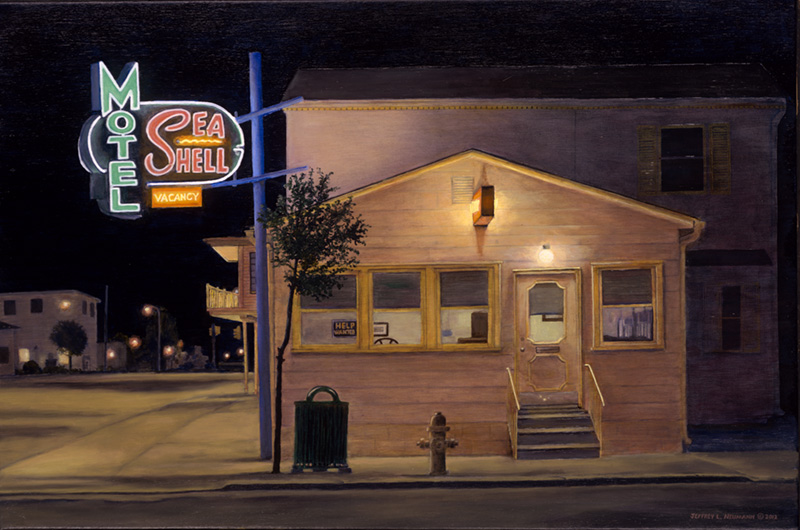
Exploring Seaside Heights, N.J., for the first time, and, sadly, I find no treasure-trove of midcentury motels like there are in Wildwood. Here, as testament, is an image of a Jeffrey L. Neumann painting of the Seashell Motel in Wildwood and my poem on the same subject (total coincidence, but not surprising, since Jeffrey and I cover the same beat: lost America).


"Sea Shell," a painting by Jeffrey Neumann

“Sea Shell,” a painting by Jeffrey Neumann

CHECKOUT AT THE SEA SHELL MOTEL

the caramel room
at the Sea Shell Motel
dollar store palm prints
and nicotine sills

cheap rum hangs in the shaft of sun dust
hula lamps hold the afternoon

dealings have come and gone —
Greek families, pimps, divorcees,
schmuck runaways, suicide watches

music plays no more
only murmurings and distant trucks
the scent of the bulldozer

‘America, I’ll Have My Way With You’ — Book Release

My latest chapbook of poetry, America I’ll Have My Way With You (Casa del Pueblo Press, 2015) was released during a book signing party and reading last week in Pueblo, Colorado, home of Casa and the Pueblo Poetry Project. It was the seventh time over the past 30 years that I’ve been the featured reader at a project event. (Copies are $6 each, postage included, and can be purchased by sending a check made out to Allen Shadow to P.O. Box 268, Catskill, N.Y. 12414.)

Cover of poetry chapbook  "America, I'll Have My Way With You"

Cover of poetry chapbook “America, I’ll Have My Way With You”

I began the America series after returning from a trip to Mexico in the summer of 2001. I’ve come to love some of my subjects, some of which are places — like New York, America. Love them so much they become personages to me, even paramours of a kind. Let’s face it, writers can get very personal with their subjects. Returning to a beloved place can reinvigorate your feelings, like returning to your longtime lover after a journey. Absence makes the heart grow fonder, but it also opens the eyes wider.

The poems in the series are written in a style called “direct address.” Think of it as writing a heartfelt letter to a loved one. In this case, it’s this whole wide, mysterious country I’ve wanted so bad to know. To me, she is like a temptress who has hold of you, keeps you hungry, keeps you wanting more.

I offer one of the poems from the chapbook as a sample:

America, I’ll Have My Way With You #136
August 17, 2001

Thank you for waiting, America
for my return from Mexico
your Lucite furniture store letters
your neglected window displays
your sandstone and faux brick face
your stairways to nowhere
at ajar doorways
your Dutch pediments
your ants and cigarette butts
your warehouse alarm housings
your dense August afternoons
lunchroom turbines whirring
dishes clanking in the alleyways

Your semis abandoned in vacant lots
your hashed roofs
your bricked up factories
your sun cut warehouse walls
your sea birds one hundred miles
from the ocean on the Hudson

Oh America, I love you
I’ve always loved you
even with your one eye
your misshapen hips
your iron nipples

‘Finding Robert Frank Online’ and Beyond

The other day The New York Times covered the announcement of a treasure trove of images from the work of Robert Frank, one of the most influential photographers of the 20th century. The National Gallery of Art has released a comprehensive archive of Frank’s work, including contact sheets and work prints, much of it never before seen by the public. It all comes in advance of Frank’s 90th birthday, in November.

As The Times says in it’s Lens Blog:

The cover image for the U.S. edition of The Americans, Robert Frank’s epochal book, spoke volumes about the state of the nation in the mid-1950s. The tightly-cropped photo shows passengers in the windows of a New Orleans trolley assuming their place in the social order of the Jim Crow South — progressing from a black woman in the rear to white children and adults up front (slide 4).

The contact sheet that contained the image showed that Mr. Frank had photographed the city from multiple perspectives, but he ultimately selected the frame that most dramatically and symbolically captured New Orleans’ racial hierarchy. Learning this photo’s backstory would be impossible without the ability to view Mr. Frank’s contact sheet. Now, such important archival material, typically reserved for scholars and curators, is just a click away.

Born in 1924 in Zurich, Switzerland, Frank took pictures in Europe and South America during his early career, but it wasn’t until he crisscrossed the seductive roads of America that Frank felt he was finally making art with his lens. With his U.S. travels in the mid-1950s, his work reached a new level, and 83 of his road images were arranged into the book The Americans.

It’s no surprised that Jack Kerouac wrote the introduction to the first U.S. edition of The Americans. The 1959 edition raised eyebrows in the media for its brute black and white candor. But The Americans, like Kerouac’s own masterwork, On the Road, opened the door to the loneness of the country’s heart and spirit and, together, they inspired a generation of artists, musicians and thinkers.
It’s interesting how foreign image makers like Frank, Mechelangelo Antonioni (Zabriskie Point, 1970), Louis Malle (Atlantic City, 1980) are able to capture the essence of the land better than most native auteurs. In fact, with the stir made by The Americans, Frank was compared to America’s original outsider observer, Alexis de Tocqueville, whose 1835 book Democracy in America helped to define the young nation’s unique character (Is it what America brings to you or what you bring to her?).

I believe a great artist is a conduit for “place.” His subject somehow finds him, speaks through him. The artist ultimately “sees” through time as the French photographer Eugène Atget once described it. I believe such artists also see through other dimensions, some of which elude us, some of which speak through intersections of light and shadow, artifact and art, quietude and cacophony, moment and mystery.

It’s hard to describe The Americans. Language could illuminate it, could degrade it. Perhaps it’s like the stuff of dreams, the magic of which begins to disappear upon transfer to the conscious mind. So much spills from the bucket on its ascent from that deep, dark well.

I was surprised and pleased when I discovered Frank himself had linked the worlds of photography and poetry in his description of his work:

When people look at my pictures I want them to feel the way they do when they want to read a line of a poem twice.

‘Checkout at the Sea Shell Motel’

When I first saw the paintings of Jeffrey L. Neumann, in a gallery in Hudson, N.Y., I could hardly contain myself. I knew I had discovered a simpatico artist, a realist painter whose images of a lost America — faded motels, eateries and roadside oddities — could have illustrated much of the nourish imagery of my poetry and fiction.

Then, recently, in a kind of artistic kismet, I discovered a poem I had written years before I happened on Jeff’s work. The poem was about a motel in Wildwood, N.J., the very same seaside relic Jeff had painted in 2009. I shared the poem with Jeff, who responded: “Wow. I can hear this set in Waitsonian (re: Tom Waits) phrasing.” He agreed to let me use the image of his painting “Sea Shell” for this publication.

My poem, accompanied by Jeff’s painting of the same subject, follows.

"Sea Shell," a painting by Jeffrey Neumann

“Sea Shell,” a painting by Jeffrey Neumann

CHECKOUT AT THE SEA SHELL MOTEL

the caramel room
at the Sea Shell Motel
dollar store palm prints
and nicotine sills

cheap rum hangs in the shaft of sun dust
hula lamps hold the afternoon

dealings have come and gone —
Greek families, pimps, divorcees,
schmuck runaways, suicide watches

music plays no more
only murmurings and distant trucks
the scent of the bulldozer

Shadow to Read in Pueblo

I’ll be reading chapters from my second novel, “Puppet Girl” (now in progress), at the Pueblo Poetry Project, Wed., Jan. 22 at 7 p.m. The reading will be held at the Daily Grind Espresso Bar and Café, 209 S. Union Ave., Pueblo, Colorado.

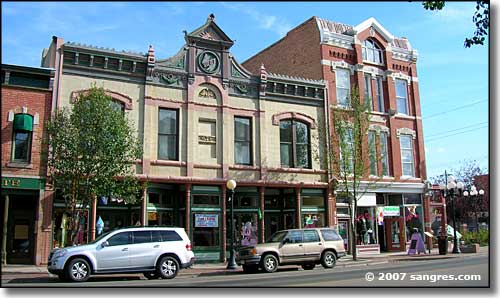
The Historic Union Street, Pueblo, Colorado, the site of Shadow's reading.

The Historic Union Street, Pueblo, Colorado, the site of Shadow’s reading.

This will be the sixth time I’ve been the featured reader at the Pueblo Poetry Project, which is in its 35th year. I’ll also be reading poems from my series, “I’ll Have My Way With You, America,” which will be released as a chapbook in the future. Meanwhile, “Puppet Girl” is a sequel to my first novel, “Hell City.”

Joel Scherzer and Robbie Rubinstein, publishers at Quick Books in Pueblo, have published my poetry, beginning with the chapbook, “Harlem River Baby,” which was first released in 1984 (and is now going into its second printing). They also edited “Hell City” and are currently at work editing “Puppet Girl.”

Catcher 22: Holden Caulfield Today

“The Catcher in the Rye” was as singular a novel as the voice of J.D. Salinger, who passed away on Thursday. To my generation – The Who, Woodstock and all that – it was the bible for the disaffected, misunderstood teenager, who was ready to flip from Peter Pan.

Of course, the flipping continued. After high school, there were new discoveries on the road, so to speak, to self-discovery: Kerouac, Ginsberg, Hemingway, Dylan, the Beatles, the Williamses (Tennessee and Hank), the Millers (Henry and Arthur), Lorca.

But today’s youth don’t have time for such protracted processes. As Jennifer Schuessler put it, writing in the New York Times last June:

Today’s pop culture heroes, it seems, are the nerds who conquer the world — like Harry (Potter) — not the beautiful losers who reject it.

Some critics say that if Holden is less popular these days, the fault lies with our own impatience with the idea of a lifelong quest for identity and meaning that Holden represents.

Since the 1980s, I’ve been saddened by the fast-track trajectory of college students. Pressure to choose a gilded career flattened any chance for soul searching during its ideal developmental period. No doubt many college students in recent times have bounced from major to major, from career to career, and have fallen under the wheels of life a few times. Yet something still seems lost in today’s culture.

Nevertheless, I’m convinced there’s something inherent in human nature that seeks its own inquisitive level despite the “so now” pressures and distractions of the times. Our three-year-old grandson, Russell is as spoiled with store-bought toys as many, but I was heartened to see that his favorite play thing of late is an empty chewing-gum box — the best gift his pappy ever gave him.

The soul lives on.
Add to Technorati Favorites
Rock Music Blogs - BlogCatalog Blog Directory

“Robert Frank’s The Americans” at the Metropolitan

I just saw the exhibit “Robert Frank’s ‘The Americans’” — centered on the photographer’s seminal book by the same name  — on display at the Metropolitan Museum of Art, New York, through Jan. 3.

Born in 1924 in Zurich, Switzerland, Frank took pictures in Europe and South America during his early career, but it wasn’t until he crisscrossed the seductive roads of America that Frank felt he was finally making art with his lens. With his U.S. travels in the mid-1950s, his work reached a new level, and 83 of his road images were arranged into the book “The Americans.”

It’s no surprised that Jack Kerouac wrote the introduction to the first U.S. edition of “The Americans (1959).” It raised eyebrows in the media for its brute black and white candor. But “The Americans,” like Kerouac’s own masterwork, “On the Road,” opened the door to the loneness of the country’s heart and spirit and, together, they inspired a generation of artists, musicians and thinkers.

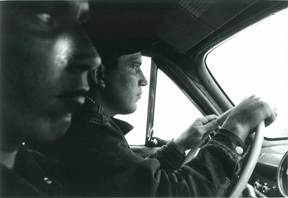
Robert Frank's "U.S. 91, leaving Blackfoot, Idaho"

It’s interesting how foreign image makers like Frank, Mechelangelo Antonioni (“Zabriskie Point,” 1970), Louis Malle (“Atlantic City,” 1980) are able to capture the essence of the land better than most native auteurs. In fact, with the stir made by “The Americans,” Frank was compared to America’s original outsider observer, Alexis de Tocqueville, whose 1835 book “Democracy in America” helped to define the young nation’s unique character (Is it what America brings to you or what you bring to her?).

I believe a great artist is a conduit for “place.” His subject somehow finds him, speaks through him. The artist ultimately “sees” through time as the French photographer Eugène Atget described it. I believe such artists also see through other dimensions, some of which elude us, some of which speak through intersections of light and shadow, artifact and art, quietude and cacophony, moment and mystery.

It’s hard to describe “The Americans.” Language could illuminate it, could degrade it. Perhaps it’s like the stuff of dreams, the magic of which begins to disappear upon transfer to the conscious mind. So much spills from the bucket on its ascent from that deep, dark well.

But I try. Actually, I thought poetry might somehow have a special access pass to the world within photography. So I offer up the following images from my forthcoming chapbook “America, I’ll Have My Way With You”:

I MISS YOU ALREADY AMERICA

I miss you already America
and you’re not even gone

leave me your messages
by the grimed phone booth
how you joke of the truth
hat tossed to eternity
leave me your hay bales
in the sweat hum of the field
waiting on farm hands
and wayward girls
leave me your Ford grillwork
idle at the company house
preaching at the two lane

leave me your truck’s whine
at the crossroads
singing that heaven
is elsewhere in the night
leave me your green trailer
singular at the corner
monument to guts
leave me your shag heart
dusting the television night
with boredom and blood

You might view the video of my song “Miss America,” too.

I was surprised and pleased to see Frank himself link the worlds of photography and poetry in his description of his work:

When people look at my pictures I want them to feel the way they do when they want to read a line of a poem twice.
Add to Technorati Favorites
Rock Music Blogs - BlogCatalog Blog Directory

Dog Guru

My wife, Roxanne and I saw Jamey Johnson last weekend in an awful club in Clifton Park, N.Y. Johnson’s a country songwriter cum recording artist who’s anything but awful. He’s one of those rare artists who come along once in a generation in a genre, in this case country.

He’s so raw and real it hurts. He’s of the outlaw breed, and his songs — even some of his hits – hold a bare light bulb to reality.

He’s a Montgomery boy, an ex-marine, ex-family man, and ex-rebel rouser, and his voice is as perfectly imperfect as his life. I’m not writing this to pitch Johnson, but country fan or not, this plainspoken poet is worth a listen.

I’m reminded of Steve Earle, who blew me away with his 1986 debut album “Guitar Town.” One literate bad boy with a voice to match. The first time I heard him I wanted to burn my guitar and typewriter (remember those), but eventually returned to my auteur senses.

Feels good to get a jolt of genius through your gut once in awhile. I find it inspirational.

What I love about guys like Johnson and Earle is their take-no-prisoners approach. They know who they are, and they live it no matter what, even if it means sacrificing at the altar of the hit-machine gods along the way.

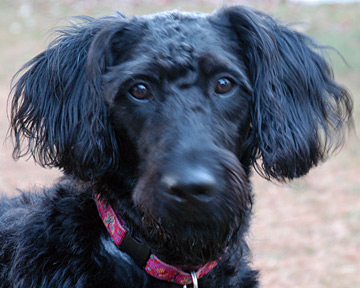
We can all use inspiration on the long and winding road of music artistry, something or someone to keep us on the scent of who we really are. For me, it’s my labradoodle, Stella. She’s my guru. She knows things even Einstein couldn’t, but most of all she knows exactly how to follow her nose, and I follow her example daily.

Stella, my guru

Stella, my guru

Johnson follows his nose at all costs, even though there are risks along the way. His next album may not do as well. He may fade from the scene like many road geniuses before him. But, no matter what, he’ll have done it his way, and he’ll have lived a fully-realized life.

For me, it took a decade to discover my voice as a poet. In fact, when I was in college, I didn’t even know what that really meant. Then, it took yet longer to marry my poetic voice with my music, even a career as a Nashville songwriter along the way, an interesting and — as I once told New York Times pop critic Jon Pareles – circuitous journey. But I now know who I am as a recording artist and know exactly where I’m headed.

And Stella keeps me on track; and no matter what, I love the ride.
Add to Technorati Favorites
Rock Music Blogs - BlogCatalog Blog Directory